How Does an Education Loan EMI Calculator Help in Financial Planning?
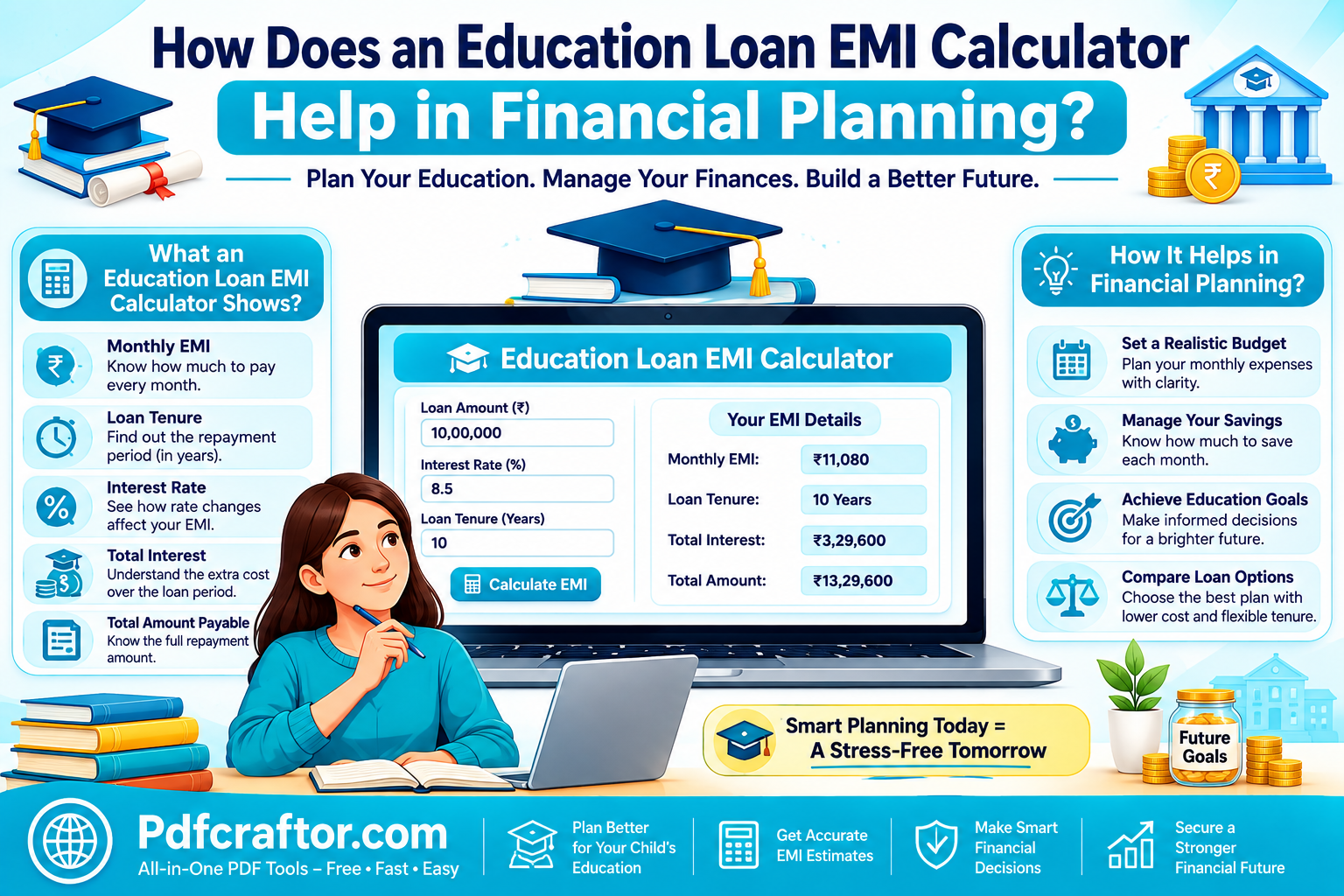
An education loan EMI calculator shows your exact monthly payment before you sign anything. Enter the loan amount, interest rate and tenure, and it reveals the EMI and total interest instantly. That lets a family test scenarios, compare lenders, keep the EMI within 30 to 40% of expected income, and plan Section 80E tax savings. Example: ₹20 lakh at 9.5% for 10 years means an EMI of about ₹25,880 and roughly ₹11 lakh in total interest.
- Before the loan: compare lenders and tenures with real numbers
- During repayment: check what prepayment saves you
- At tax time: know the interest figure for your 80E deduction
Most families discover their education loan EMI the hard way: after the sanction letter arrives. By then the college is chosen, the fees are committed, and the monthly number is whatever it is.
Flip that order and everything changes. Ten minutes with a free EMI calculator, before you approach a single bank, tells you what each borrowing choice will actually cost per month and in total interest. That's the whole idea of this article: the calculator isn't a repayment gadget, it's a planning tool. Used early, it can save a family several lakh rupees over the life of one loan.
What Is an Education Loan EMI Calculator?
It's a free online tool with three inputs: loan amount, interest rate, and repayment tenure. It applies the standard EMI formula, EMI = [P x R x (1+R)^n] / [(1+R)^n - 1], where P is principal, R is the monthly interest rate and n is the number of months, and instantly shows your monthly EMI, total interest, and total repayment.
Nothing you couldn't do by hand with enough patience, honestly. But the point isn't one calculation. The point is running twenty calculations in five minutes, changing one input at a time and watching what happens. That's scenario planning, and no pen-and-paper method makes it this easy.
Education loans in India currently run from about 8.1% at public sector banks to 13.5% and above at private lenders and NBFCs, and that spread is exactly why the calculator matters. The same ₹20 lakh loan costs very different money at each end of it.
Why Should You Plan the Loan Before You Sign It?
Because after signing, your options shrink to prepayment or refinancing. Before signing, everything is negotiable: the amount, the lender, the tenure, even the college budget.
Here's a planning session worth copying. A family considering a ₹20 lakh loan sits down with the education loan calculator and answers three questions with actual numbers:
- "What does each lender really cost?" A 9% public bank offer versus an 11% private one looks like "just 2%". Over 10 years on ₹20 lakh, that gap is roughly ₹2.7 lakh in extra interest. Suddenly the paperwork for the cheaper bank feels worth it.
- "Can we pay more upfront?" Borrowing ₹17 lakh instead of ₹20 lakh by using some savings drops both the EMI and the interest visibly. The calculator shows exactly how much, so the family can decide whether to protect savings or shrink the loan.
- "Which tenure fits our life?" This one deserves its own section, because it's the biggest lever of all.
One thing to keep in mind: most education loans start repayment after a moratorium, the course period plus 6 to 12 months, and interest quietly accumulates during that time. We've covered exactly how that works in our education loan moratorium period guide, so here we'll stay focused on the planning side.
How Do Tenure and Interest Rate Change Your EMI?
Here's the same ₹20 lakh loan under different choices. Look at how the numbers move:
| Tenure | EMI at 9% | Total interest at 9% | EMI at 11% | Total interest at 11% |
|---|---|---|---|---|
| 7 years | ₹32,178 | ₹7.03 lakh | ₹34,245 | ₹8.77 lakh |
| 10 years | ₹25,335 | ₹10.40 lakh | ₹27,550 | ₹13.06 lakh |
| 15 years | ₹20,285 | ₹16.51 lakh | ₹22,732 | ₹20.92 lakh |
Two lessons jump out. First, the tenure trade-off is brutal. Stretching from 7 to 15 years at 9% makes the EMI ₹12,000 lighter but more than doubles the total interest, from ₹7 lakh to ₹16.5 lakh. A longer tenure is not "cheaper", it's costlier money spread thinner.
Second, rate and tenure multiply each other. The worst cell in that table (11%, 15 years) pays nearly ₹21 lakh interest on a ₹20 lakh loan. The best cell pays ₹7 lakh. Same degree, same college, triple the interest. This single table is the strongest argument for planning before borrowing, and you can rebuild it for your own numbers in two minutes.
How Much EMI Can You Afford on Your Expected Salary?
A useful rule from lending practice: keep all your EMIs within 30 to 40% of monthly take-home income. Cross that line and everyday life starts feeling squeezed, one emergency away from a missed payment.
For a fresh graduate, this means planning against the salary you can realistically expect, not the best-case package from placement brochures. If graduates from your course typically start around ₹60,000 per month, a ₹25,000 EMI eats 40% of it, right at the ceiling. A ₹20,000 EMI leaves breathing room for rent, and yes, a life.
Work the calculator backwards: start from the affordable EMI, then find the loan amount and tenure that produce it. If the numbers refuse to meet, that's not the calculator being pessimistic, that's an early warning worth hearing while you can still adjust the plan, choose a cheaper option, or hunt for scholarships. A quick note for female students: most public sector banks offer around a 0.5% interest concession, which is worth asking about because even half a percent shifts every row of that table.
Where Does Section 80E Fit Into the Plan?
Section 80E of the Income Tax Act lets you deduct the entire interest paid on an education loan from taxable income, with no upper limit. Three catches worth planning around:
- It covers interest only, never the principal portion of your EMI.
- It's available for a maximum of 8 years from the year repayment begins.
- It applies under the old tax regime, and the loan must be from a bank or approved financial institution.
Here's where the calculator earns its keep again: the amortization view shows how much of each year's EMIs is interest. Early years are interest-heavy, so the 80E benefit is largest exactly when the loan feels heaviest, a genuinely helpful design. Knowing your year-wise interest figure also helps you choose between the old and new regime with real numbers; run both through an income tax calculator instead of guessing.
Is a Home Loan EMI Calculator Any Different?
The formula is identical, only the inputs change: bigger amounts, longer tenures, slightly lower rates. A ₹40 lakh home loan at 8.5% for 20 years works out to an EMI of about ₹34,713, with total interest of roughly ₹43 lakh, more than the loan itself. Long tenures do that.
The reason to mention it here: many parents end up servicing a home loan EMI and co-signing an education loan in the same decade. Running both through their calculators, and adding the two EMIs against household income with that same 40% ceiling, is the difference between a managed decade and a stressful one. The generic EMI calculator handles any other loan, car, personal, gold, with the same three inputs.
FAQ
How does an EMI calculator help in financial planning?
It converts borrowing decisions into exact monthly numbers before you commit. You can compare lenders, test tenures, check EMI against expected income, and see total interest for each option, which turns guesswork into an informed plan.
What is the formula for education loan EMI?
EMI = [P x R x (1+R)^n] / [(1+R)^n - 1], where P is the principal, R is the monthly interest rate (annual rate divided by 12), and n is the tenure in months. An online calculator applies this instantly so you don't have to.
How much education loan EMI can I afford?
Keep total EMIs within 30 to 40% of monthly take-home income. Plan against a realistic expected starting salary for your course, not the highest package you've heard of.
Does a longer tenure make an education loan cheaper?
No. A longer tenure lowers the monthly EMI but increases total interest sharply. On ₹20 lakh at 9%, moving from 7 to 15 years cuts the EMI by about ₹12,000 but adds over ₹9 lakh in interest.
Can I claim tax benefits on my education loan EMI?
Yes, under Section 80E you can deduct the full interest portion of your EMIs from taxable income for up to 8 years from when repayment starts, under the old tax regime. The principal portion gets no deduction.
Is a home loan EMI calculator different from an education loan calculator?
The underlying formula is the same. The tools differ in typical inputs, home loans involve larger amounts and longer tenures, and education loan calculators often account for the moratorium period before repayment begins.
Conclusion
An education loan EMI calculator helps most before a single rupee is borrowed. Run the scenarios: each lender's rate, each tenure, each possible loan amount, and let the totals guide the decision. Keep the EMI within 30 to 40% of realistic income, resist the temptation of the longest tenure, and note your yearly interest for the Section 80E claim. The same ₹20 lakh education can cost ₹27 lakh or ₹41 lakh depending on choices made in one afternoon of planning. Spend that afternoon with the education loan EMI calculator, and if a home loan shares the family budget, run it through the home loan EMI calculator too. The numbers are free; ignoring them isn't.
Share this article
Sharad Mishra
Content Writer
Published on August 16, 2026
Related Articles
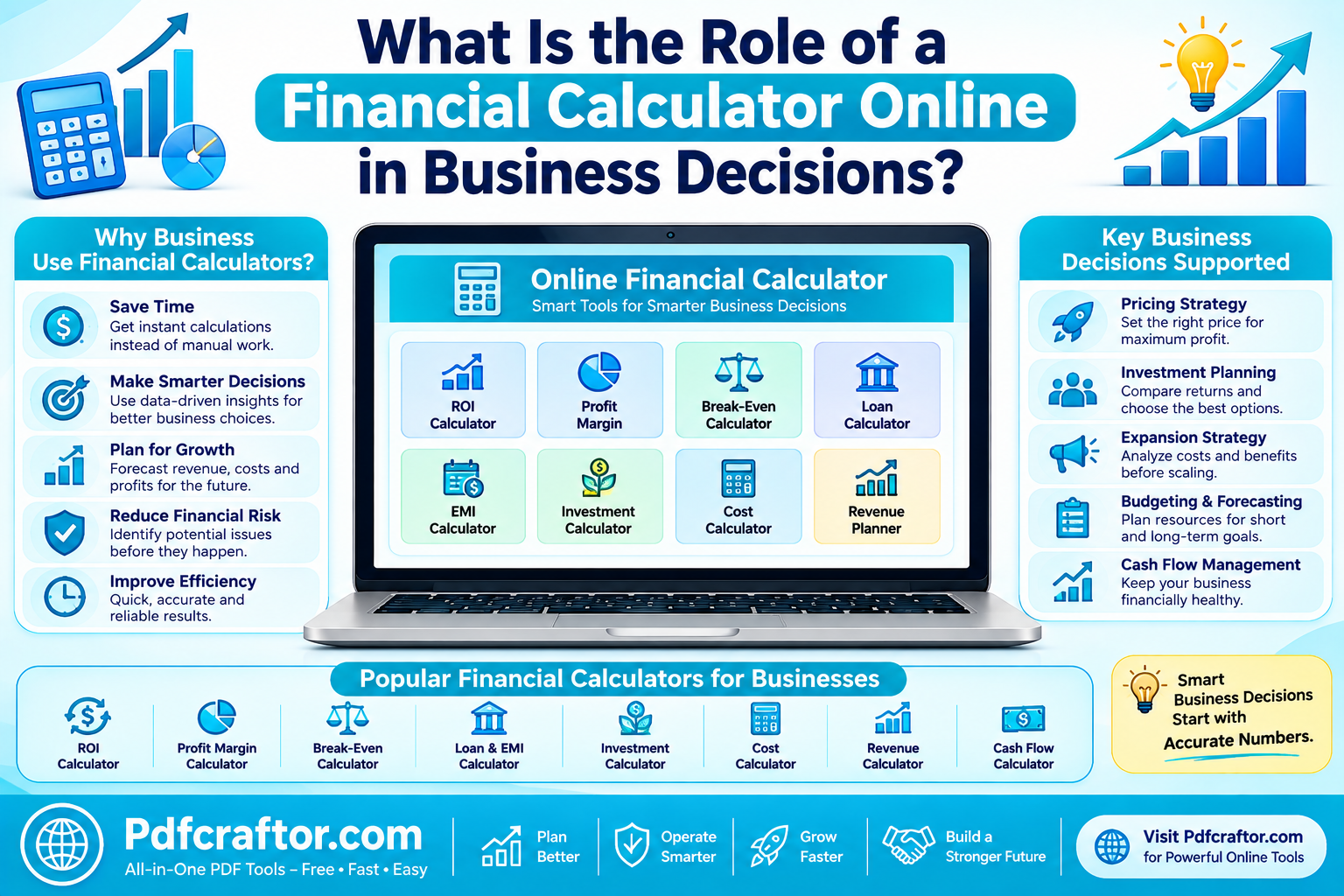
What Is the Role of a Financial Calculator Online in Business Decisions?
How a financial calculator online sharpens business decisions: price with margin math, test loan EMIs, get GST right, and park surplus cash at NSC's 7.7%.
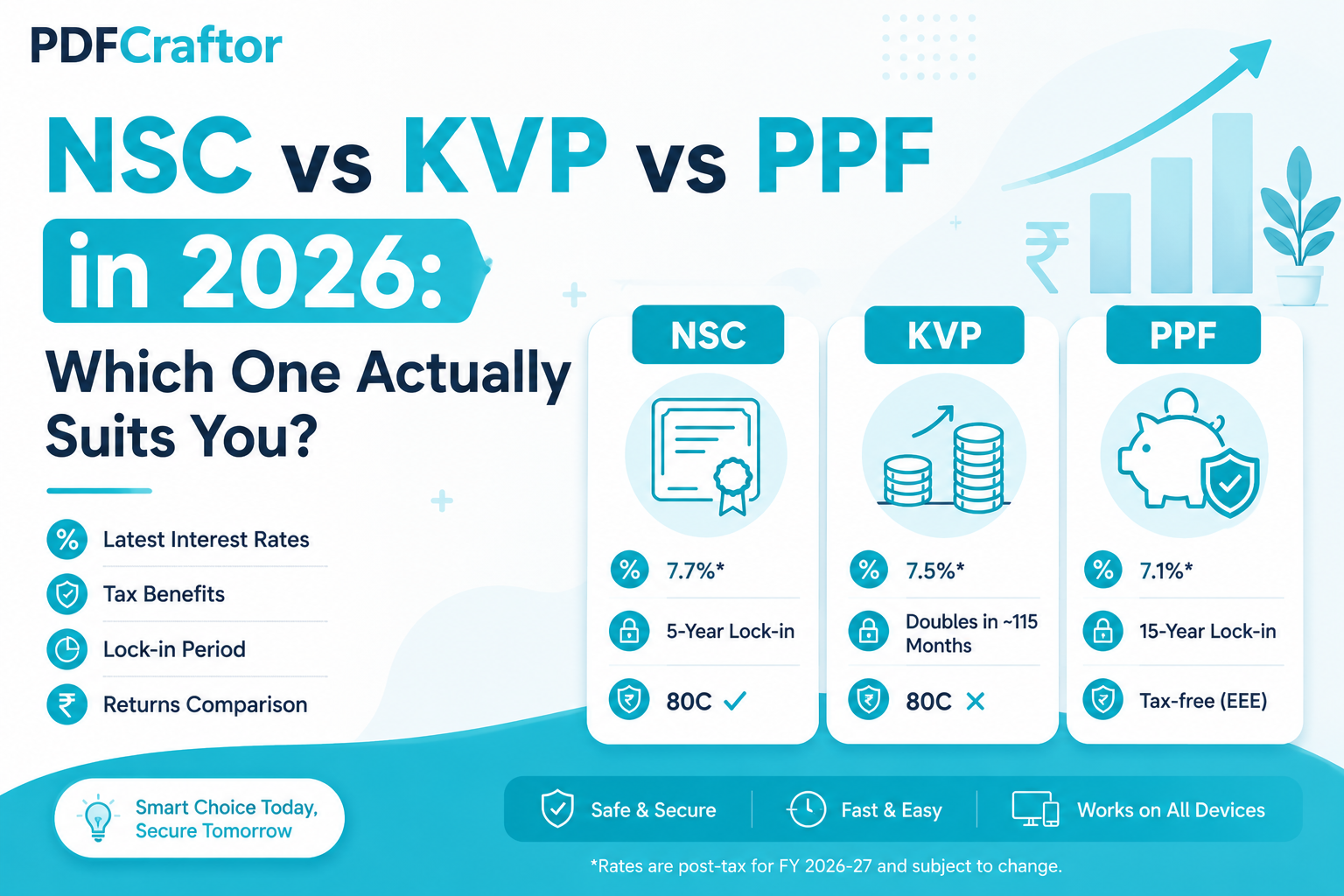
NSC vs KVP vs PPF in 2026: Which One Actually Suits You?
NSC vs KVP vs PPF compared for 2026, interest rates, lock-in & 80C tax benefits explained simply, so you can pick the right post office scheme for your goal.
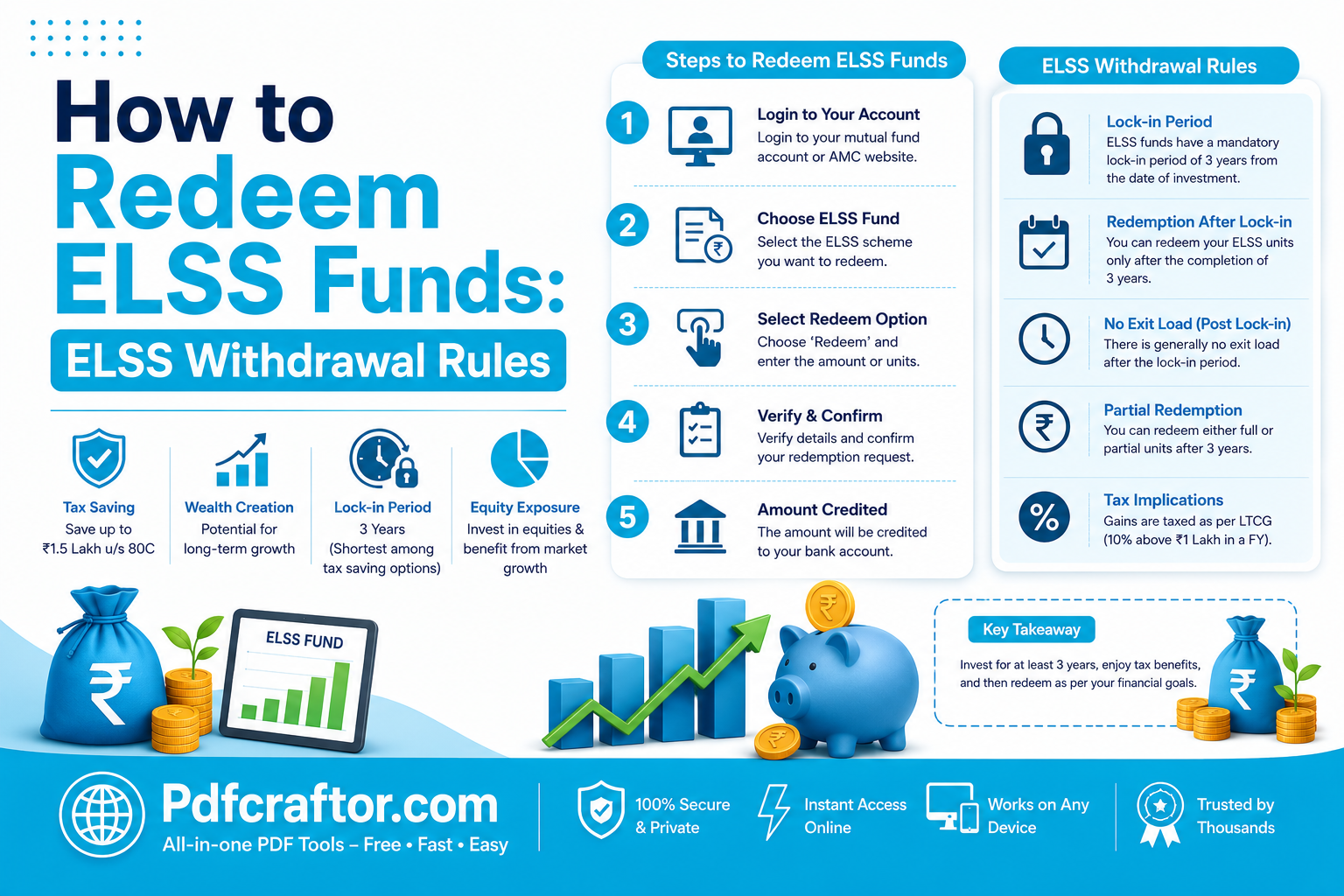
How to Redeem ELSS Funds: ELSS Withdrawal Rules
To redeem ELSS funds, first complete the mandatory 3-year lock-in — ELSS cannot be withdrawn early for any reason. After that, log in to your fun...