How to Redeem ELSS Funds: ELSS Withdrawal Rules
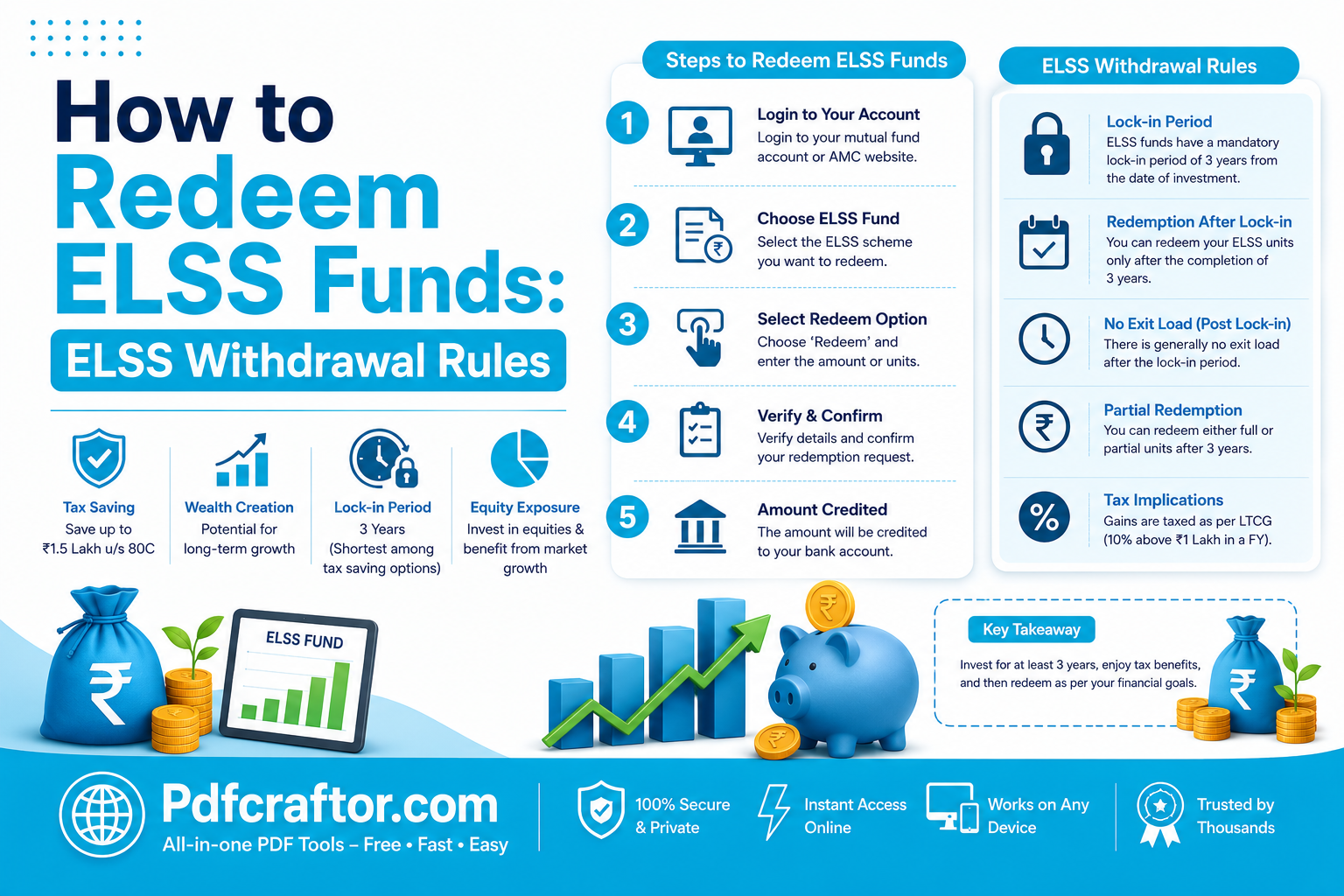
To redeem ELSS funds, first complete the mandatory 3-year lock-in — ELSS cannot be withdrawn early for any reason. After that, log in to your fund house or platform, place a redemption request for the units you want, and the money reaches your bank in 3–5 working days. Use an ELSS calculator first to estimate your maturity value and likely tax.
- Lock-in: 3 years from each investment date, no premature exit
- Exit load: none after lock-in — redeem fully or partially
- SIP rule: every instalment has its own 3-year lock-in
- Tax: LTCG above ₹1.25 lakh a year is taxed at 12.5%
ELSS (Equity Linked Savings Scheme) is the most popular tax-saving mutual fund under Section 80C, and for good reason — it has the shortest lock-in of all 80C options and the growth potential of equity. But when it is time to take your money out, the rules confuse a lot of investors, especially anyone who invested through a monthly SIP.
This guide explains exactly how ELSS redemption works: when you can withdraw, the SIP trap that surprises most people, how the tax is calculated in 2026, and how to use an ELSS calculator to plan the redemption before you click the button.
The 3-Year Lock-In: When Can You Redeem?
Every ELSS investment is locked for three years from the date you make it. This lock-in is set by SEBI and is strict — there is no early withdrawal, no premature exit, and no exception for emergencies, job loss, or a market crash. ELSS does not even charge an exit load, because you simply cannot redeem before the term ends.
The upside is that three years is far shorter than the lock-in on a PPF (15 years), an NSC (5 years), or a tax-saving FD (5 years). Once your three years are up, the units are fully yours to redeem whenever you like — there is no rush and no penalty for holding longer.
The SIP Trap: Why You Can’t Redeem Everything at Once
This is the single biggest misunderstanding about ELSS. If you invest a lump sum, the whole amount unlocks together after three years. But if you invest through a monthly SIP, each instalment is treated as a separate investment with its own 3-year lock-in.
So the SIP you paid in April 2023 unlocks in April 2026; the one from May 2023 unlocks in May 2026, and so on. Units are released on a first-in, first-out basis. You cannot redeem your full SIP portfolio the moment the first instalment matures — the newer instalments are still locked.
| SIP Instalment Date | Amount | Unlocks On |
|---|---|---|
| April 2023 | ₹5,000 | April 2026 |
| May 2023 | ₹5,000 | May 2026 |
| June 2023 | ₹5,000 | June 2026 |
| March 2024 | ₹5,000 | March 2027 |
Before redeeming, check the “available to redeem” figure on your platform — it shows only the units that have crossed three years.
How to Redeem ELSS Funds in 4 Steps
Once your units are unlocked, the process is quick and fully online.
Step 1: Check your unlocked units
Log in to your fund house, mutual fund platform, or Demat account and find how many units have completed the lock-in. Only these can be redeemed.
Step 2: Choose full or partial redemption
Decide whether to withdraw everything or just a part. Partial redemption lets the rest stay invested and keep growing, which is useful if you only need a portion of the money.
Step 3: Place the redemption request
Enter the units or amount and confirm. Equity funds are processed at that day’s NAV if you place the order before the cut-off time (usually 3 PM).
Step 4: Receive the money
The proceeds are credited to your registered bank account in about 3–5 working days. No exit load is deducted.
How ELSS Redemption Is Taxed in 2026
Because ELSS is held for at least three years, every redemption is a Long-Term Capital Gain (LTCG). Under the rules in force for FY 2025-26:
- LTCG up to ₹1.25 lakh in a financial year is tax-free
- Gains above ₹1.25 lakh are taxed at a flat 12.5% (plus applicable cess), with no indexation benefit
- Only the profit is taxed, not the full redemption amount
For example, if you redeem units and your gain is ₹1.5 lakh, the first ₹1.25 lakh is exempt and only the remaining ₹25,000 is taxed at 12.5% — roughly ₹3,125. A smart way to stay tax-efficient is to spread large redemptions across two financial years so you use the ₹1.25 lakh exemption twice.
Plan Your Redemption With an ELSS Calculator
Before you redeem, it helps to know two numbers: what your investment is worth now, and how much of it is taxable gain. An ELSS calculator gives you both in seconds.
Enter your investment amount (or SIP), the holding period, and an expected return, and the ELSS mutual fund calculator shows your estimated maturity value and total gain. From there you can see whether your profit crosses the ₹1.25 lakh exemption and plan a partial redemption to stay under it.
It is also worth comparing tools. If you invest in non-tax-saving funds too, a general mutual fund calculator works for those, while a SIP calculator helps you project ongoing monthly investments.
Should You Redeem or Stay Invested?
Completing the lock-in does not mean you have to withdraw. ELSS is an equity fund, so the longer you stay, the more time compounding has to work. Redeem when you have a real goal for the money — a down payment, a fee, a planned purchase — not just because the units unlocked.
| Redeem Now If… | Stay Invested If… |
|---|---|
| You need the money for a goal | You have no immediate use for it |
| The fund has underperformed for years | The fund is performing well |
| You want to rebalance your portfolio | You want long-term equity growth |
| Your gain fits the tax-free limit | A later exit suits your tax planning |
Common Mistakes to Avoid
ELSS redemption is simple, but a few errors cost money. Do not assume your whole SIP portfolio unlocks on one date — check each instalment. Do not redeem a large gain in one financial year if splitting it would keep you under the ₹1.25 lakh exemption. Avoid panic-selling during a market dip right after the lock-in ends. And do not confuse ELSS with regular funds, which have no lock-in but also no 80C benefit.
ELSS vs Other 80C Options at Redemption
Part of ELSS’s appeal is how easily you can access the money once the short lock-in ends.
| Option | Lock-In | Returns |
|---|---|---|
| ELSS | 3 years | Market-linked (equity) |
| PPF | 15 years | Fixed, government-set |
| NSC | 5 years | Fixed |
| Tax-saving FD | 5 years | Fixed |
If you are still building your 80C plan, a PPF calculator or income tax calculator can help you compare options and confirm how much you actually need to invest to claim the deduction.
FAQ
Can I withdraw ELSS before 3 years?
No. ELSS has a mandatory 3-year lock-in set by SEBI, with no premature withdrawal allowed for any reason, including emergencies or market falls.
How long does ELSS redemption take?
After you place a redemption request for unlocked units, the proceeds reach your registered bank account in about 3–5 working days, with no exit load.
Why can’t I redeem my full SIP investment after 3 years?
Each SIP instalment has its own 3-year lock-in. Only instalments older than three years can be redeemed, on a first-in, first-out basis.
How is tax calculated when I redeem ELSS?
Gains are Long-Term Capital Gains. Up to ₹1.25 lakh a year is tax-free; profit above that is taxed at 12.5%. Use an ELSS calculator to estimate your gain first.
Do I have to redeem ELSS as soon as the lock-in ends?
No. There is no penalty for holding longer. Since ELSS is an equity fund, staying invested can grow your money further if you do not need it yet.
Conclusion
Redeeming ELSS funds is straightforward once you understand the rhythm: wait out the 3-year lock-in, remember that each SIP instalment unlocks on its own date, and check the tax on your gains before you withdraw. Run the numbers through an ELSS calculator so you know your maturity value and can time a partial redemption around the ₹1.25 lakh exemption. With a clear plan, you keep more of your returns and withdraw exactly when it suits your goals.
Share this article
Sharad Mishra
Content Writer
Published on July 4, 2026
Related Articles
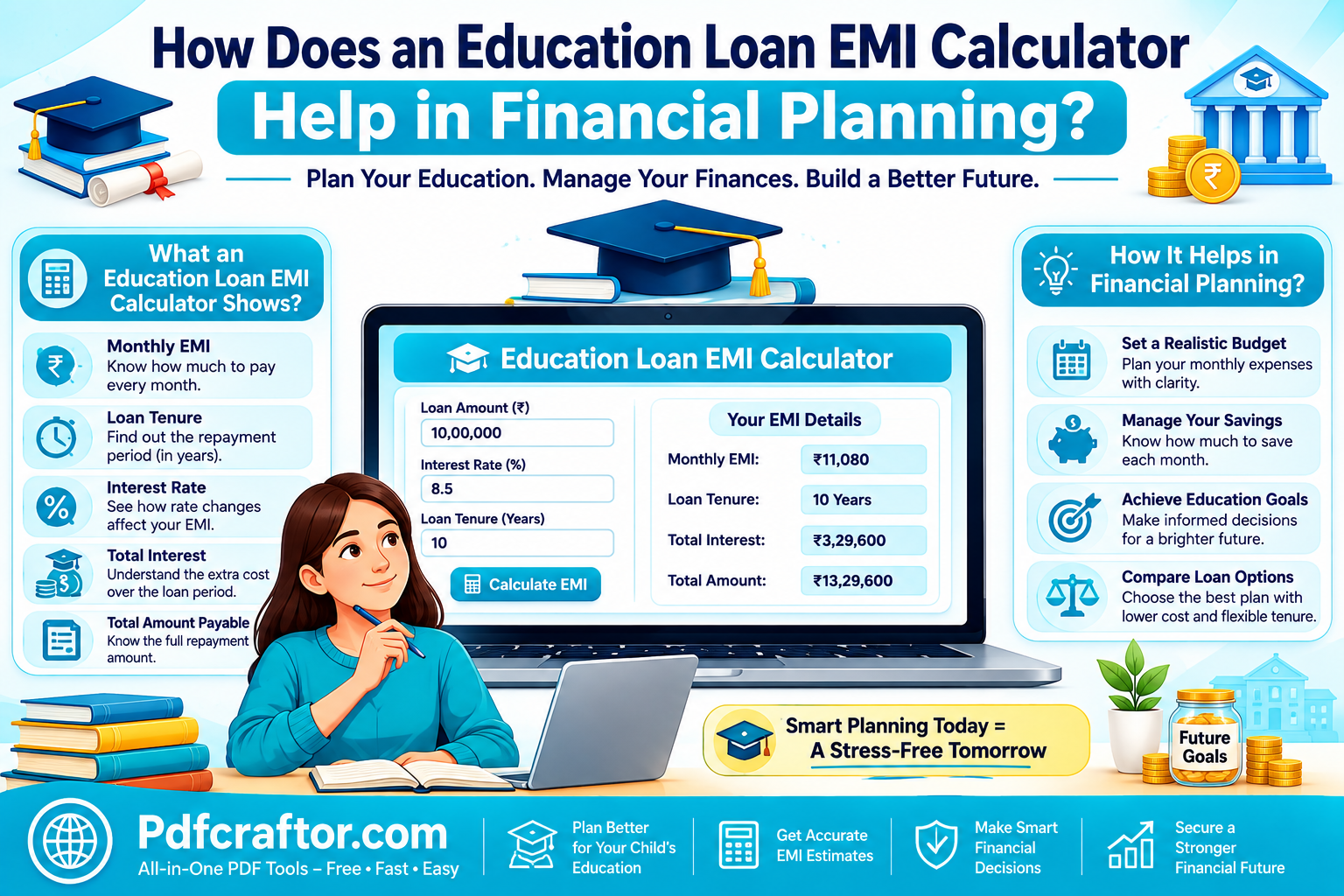
How Does an Education Loan EMI Calculator Help in Financial Planning?
How an education loan EMI calculator helps in financial planning: test tenure and rate scenarios, keep EMI within your salary, and time Section 80E tax savings.
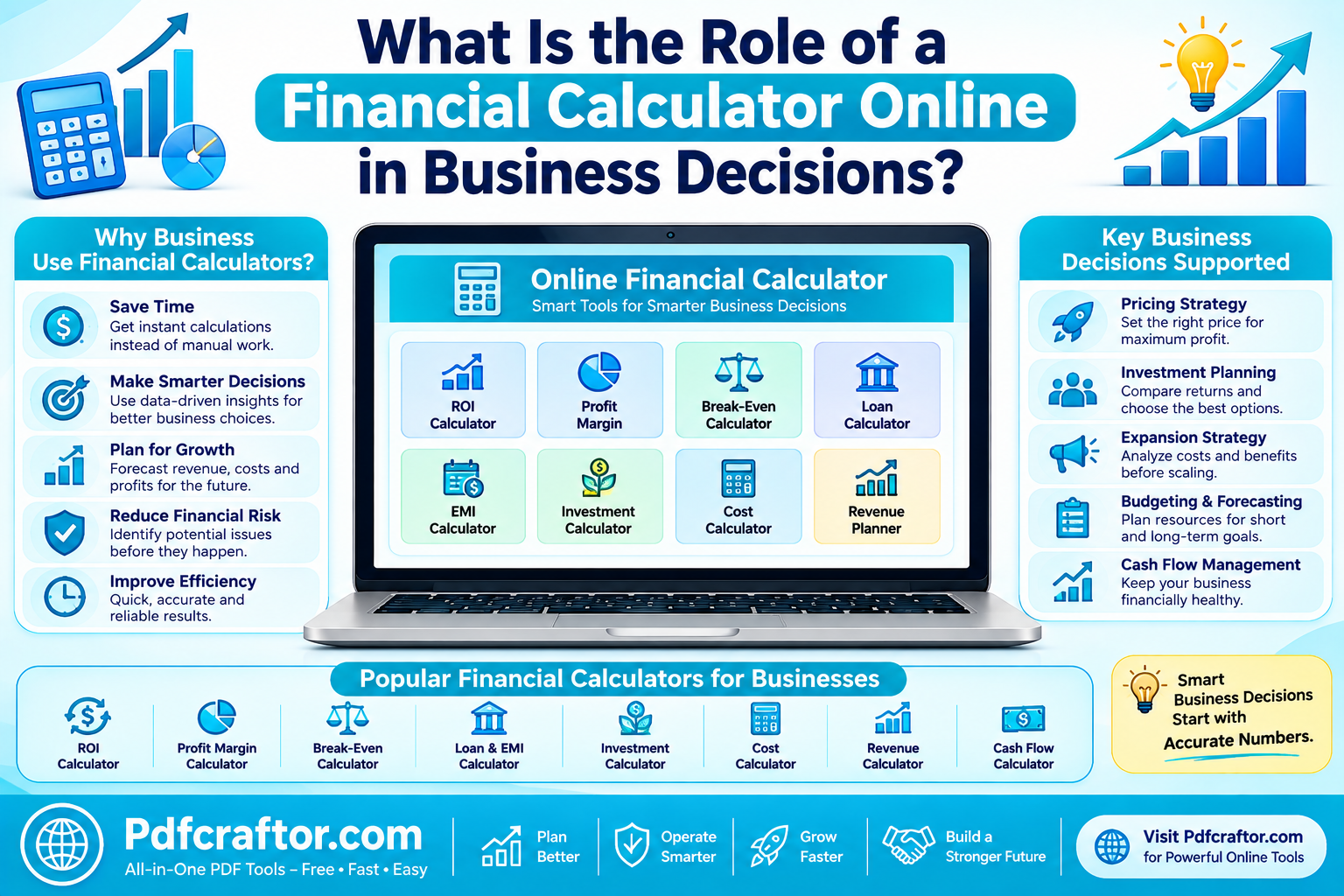
What Is the Role of a Financial Calculator Online in Business Decisions?
How a financial calculator online sharpens business decisions: price with margin math, test loan EMIs, get GST right, and park surplus cash at NSC's 7.7%.
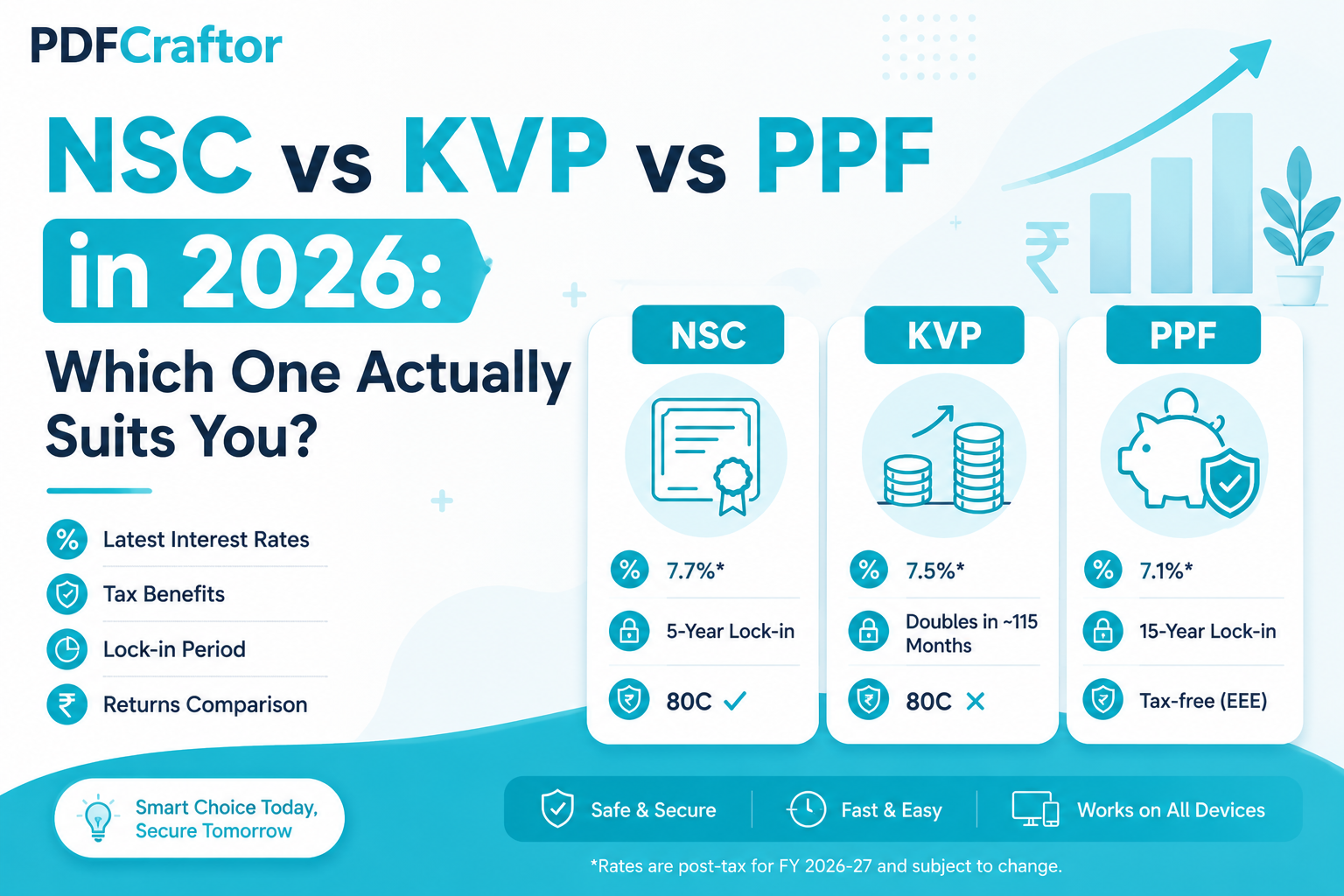
NSC vs KVP vs PPF in 2026: Which One Actually Suits You?
NSC vs KVP vs PPF compared for 2026, interest rates, lock-in & 80C tax benefits explained simply, so you can pick the right post office scheme for your goal.